The Blooming Joy Journal
How I Keep My Greenhouse Warm: Simple & Effective Heating Methods
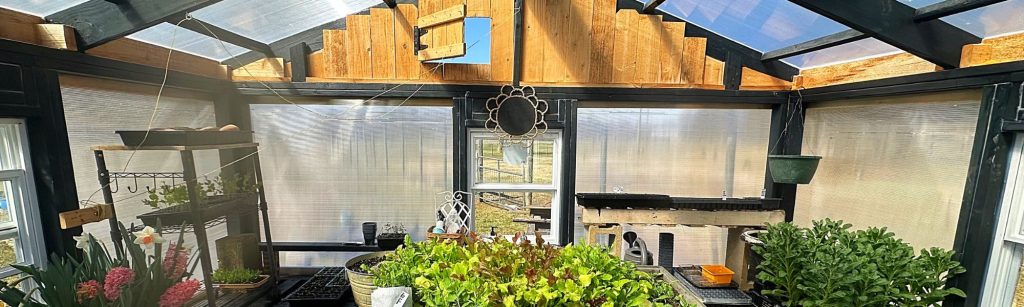
Greenhouse growing has been a fun, challenging experiment over the past year. I grow plants in the middle Tennessee area where our summers are hot and our winters are a big mess of up and down cold/warm temperatures. The primary reason we built our greenhouse was to protect our well (those of us on a farm often have a well that we get water from!). We needed a structure that would not freeze inside during the winter to help prevent water issues during extreme cold periods. My husband knows I love to grow plants so much that he custom designed a greenhouse to help fit our needs!
I’ve found a handful of ways to heat my greenhouse efficiently without relying too heavily on expensive electricity or propane. In fact, I do not use propane at all in my greenhouse. Some of these methods are completely natural, while others provide just enough supplemental warmth to keep things growing strong. If you're looking for ways to keep your greenhouse cozy during the cold months, here are five simple but effective strategies that work for me.
Utilizing Natural Warmth of Sunlight
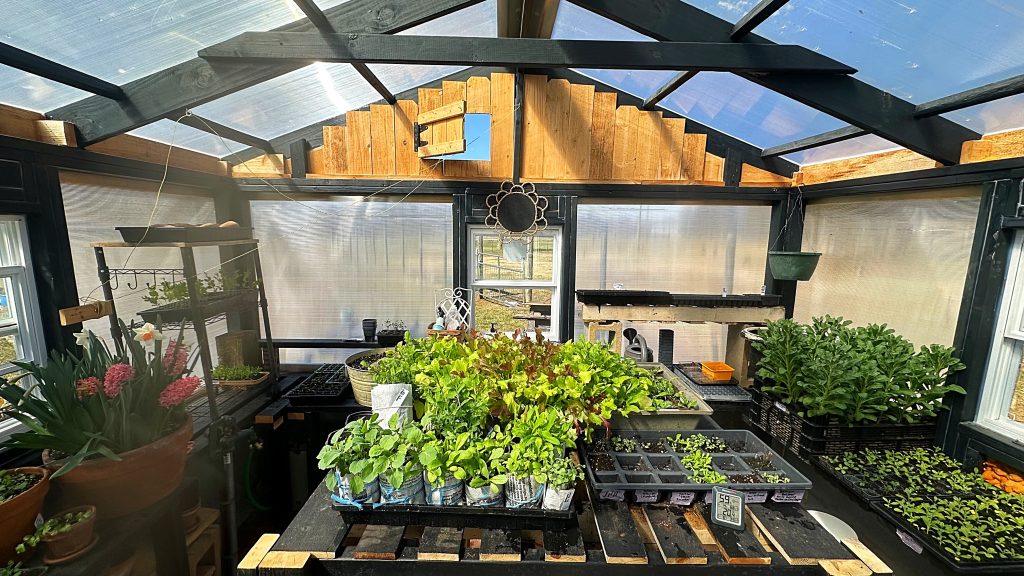
This one might be kinda obvious but I really had NO IDEA how much a sunny day could heat a greenhouse! The sun is the most powerful and cost-effective heat source, so I take full advantage of it. My greenhouse is positioned to capture the maximum amount of sunlight during the day, allowing the structure to warm up naturally.
On sunny days, even when it’s 30 degrees outside, my greenhouse temperature can be 80 degrees if I had all the windows shut. I’ve learned to use this to my advantage by keeping things well-insulated and trapping as much of that warmth as possible for when temperatures drop at night.
Cinderblock Foundation with Spray Foam Insulation
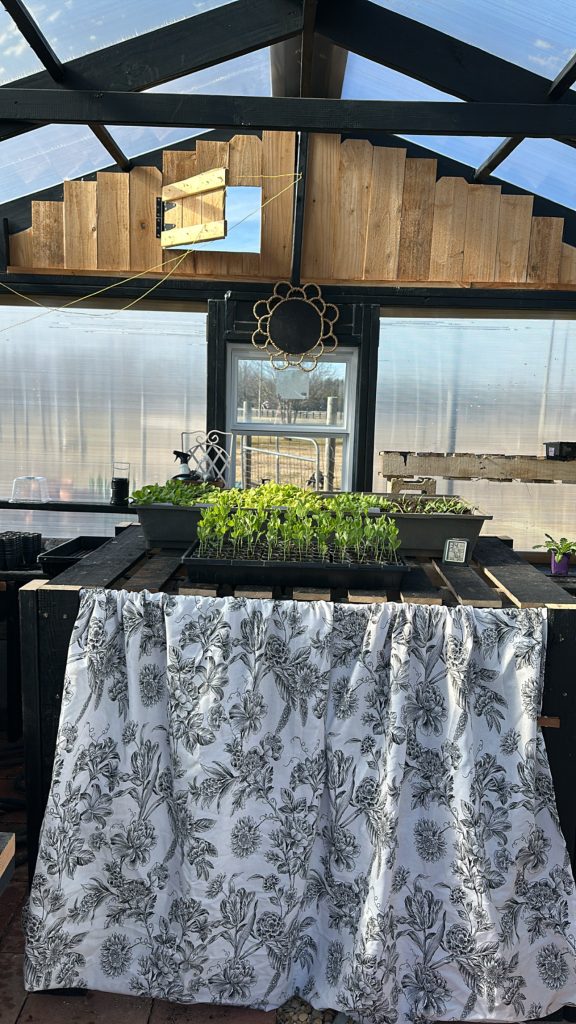
Another heat-retention method we utilized when building the structure of the greenhouse is using a cinderblock foundation with spray foam insulation. The cinderblocks not only prevent the greenhouse from blowing away in heavy winds but they also absorb warmth during the day and release it gradually at night. What really helps is sealing any gaps with spray foam insulation—this prevents cold air from seeping in and warm air from escaping.
Retaining Heat with a Paver Floor
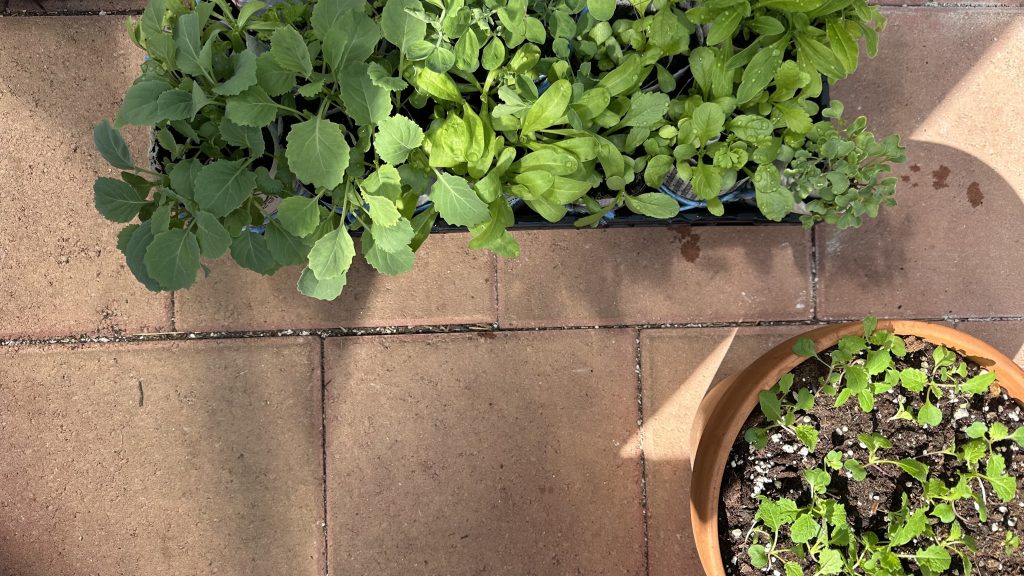
One of the best decisions we made was installing a paver floor. Pavers act as thermal mass, meaning they absorb heat during the day and slowly release it as the temperature drops at night. This helps regulate the greenhouse temperature without any extra effort.
Using Black Wooden Tables to Absorb and Radiate Heat
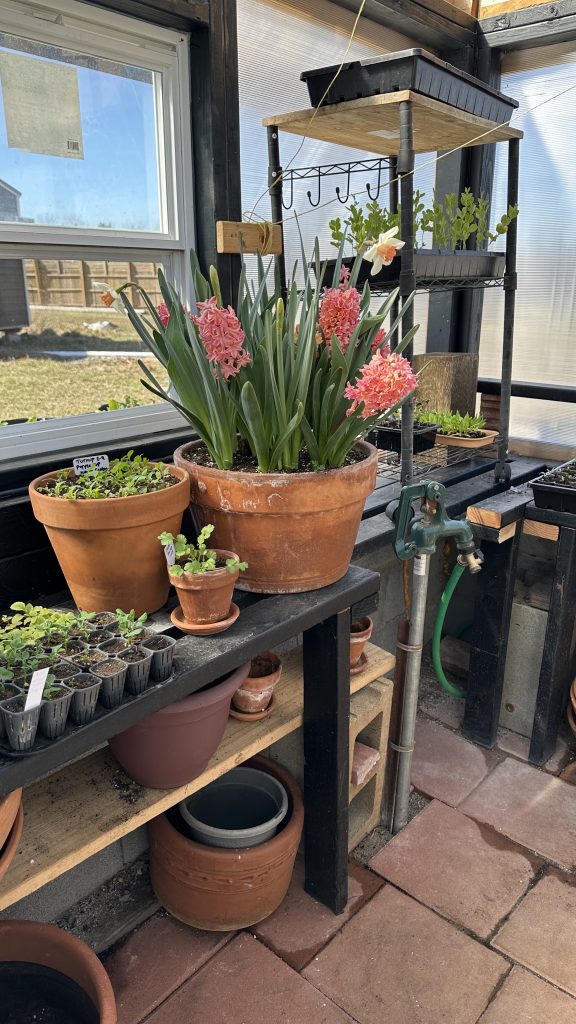
This is a trick I stumbled upon by accident. I had painted my greenhouse tables black purely for aesthetics, but I soon realized they were absorbing and holding heat during the day. By evening, I could still feel the warmth on the surface of the tables, and I knew they were helping keep the surrounding air slightly warmer.
The combination of wood (which holds warmth) and black paint (which absorbs heat) makes these tables surprisingly effective in regulating temperature.
Keeping the Greenhouse Full of Plants
One of the easiest and most overlooked ways to keep a greenhouse warm is simply by keeping it full! Plants naturally release moisture and warmth, creating a microclimate that helps regulate the overall temperature. The more plants I have packed in, the more stable the greenhouse stays.
I noticed this effect when I first started growing through the winter—an empty greenhouse felt noticeably colder, while a greenhouse filled with trays of seedlings seemed to hold heat better. Even if you’re between growing seasons, keeping pots of leafy greens or cold-tolerant plants can make a difference in maintaining warmth.
Supplementing with a small Space Heater when Needed
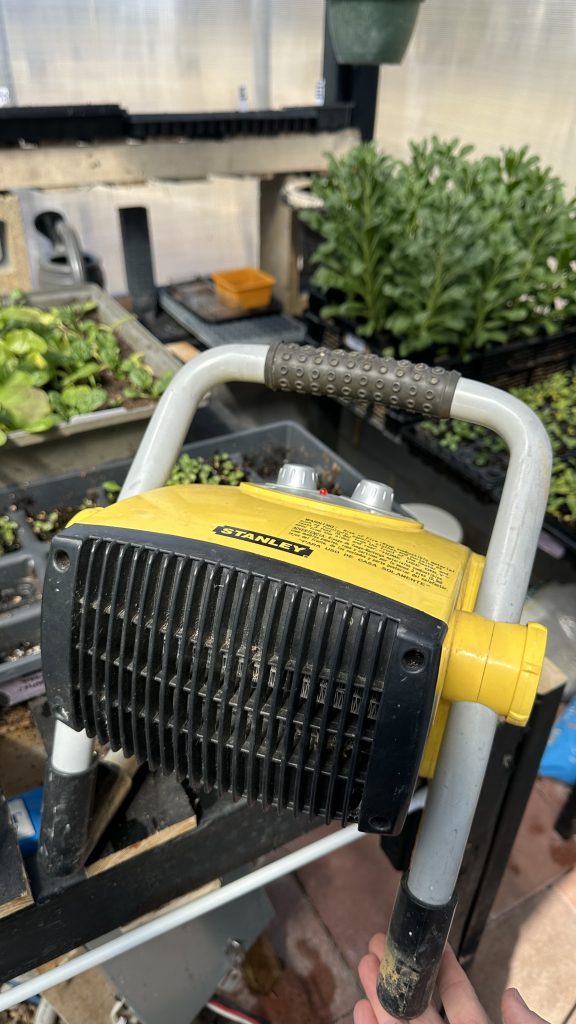
Even with all the natural heat retention methods, there are some nights when a little extra warmth is necessary—especially when temperatures drop into the teens. I use a small construction space heater to help keep my greenhouse at a safe temperature, but I’m mindful of how and when I use it.
Instead of running it constantly, I have it on a timer so it only turns on when absolutely needed. I also keep it positioned strategically in the greenhouse (low because heat rises) to maximize its efficiency. This method isn’t my primary heat source and not often used, but it provides peace of mind on those extra cold nights when my plants need a little extra protection.
Conclusion: The Cozy Greenhouse Effect
By combining these six methods, I’ve created a system that keeps my greenhouse warm with minimal electricity use. It also helps that I live in a mild winter climate. Each of these strategies works together—capturing natural heat, retaining it, and supplementing only when necessary. If you’re looking for a way to warm your greenhouse more efficiently, I’d recommend starting with maximizing sunlight and adding thermal mass, like pavers or cinderblocks, before relying on external heat sources.
There’s something magical about stepping into a greenhouse in the middle of winter and feeling that cozy warmth surround you. It’s a little glimpse of spring, even when the world outside is covered in frost. With a few simple adjustments, you can create a warm and thriving space for your plants all season long.
I'd love to know in the comments- Do you have other ways you heat your greenhouse?!
Facebook Pinterest Email